Published 30 October 2026
A CBS programme brought its intro week together on Oase
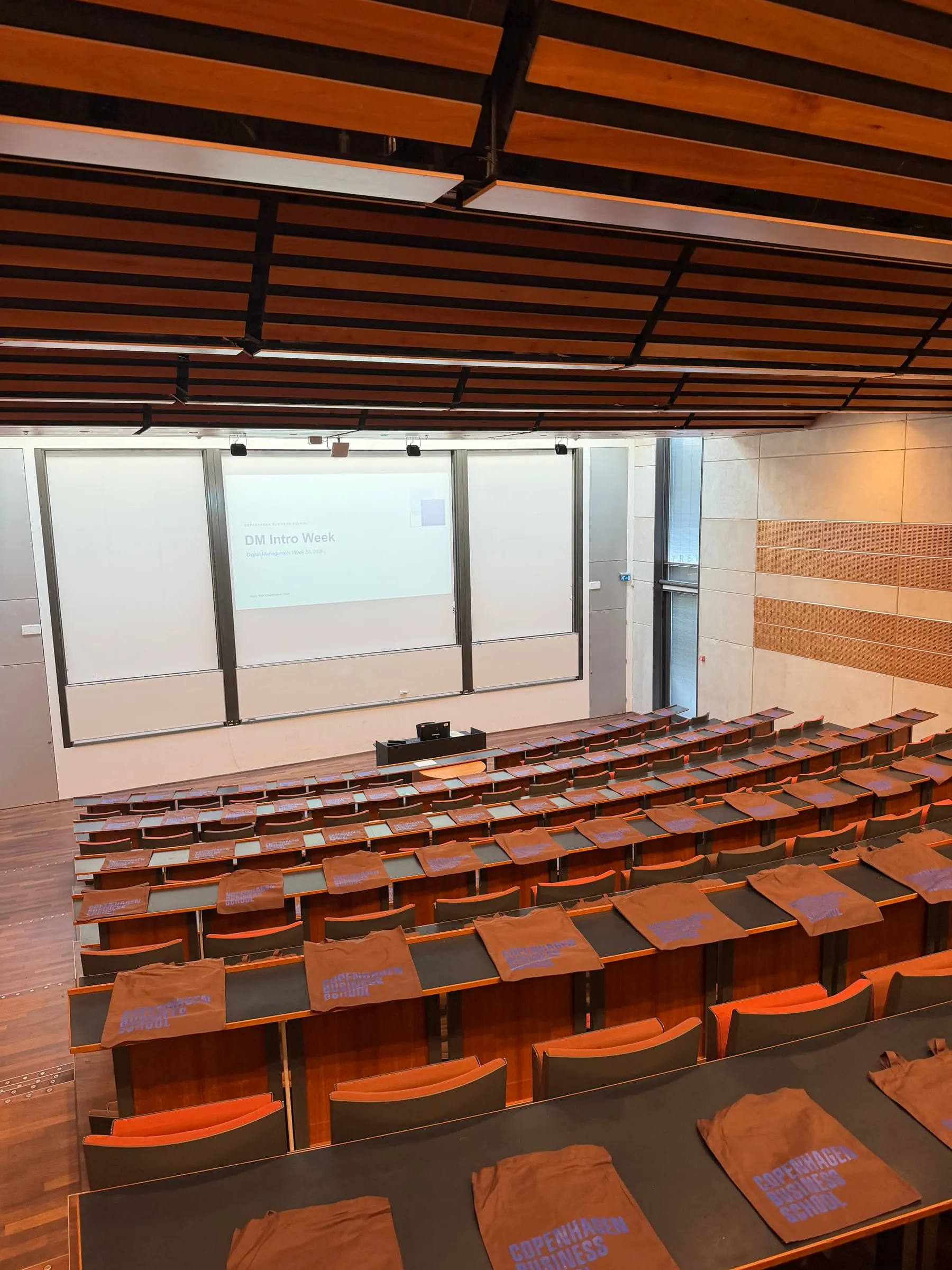
Monday 24 August 2026 was the first day of school for hundreds of new CBS students from Denmark and abroad.
Among the new faces, the intro guides walk around in t-shirts in CBS colours. It’s their job to keep the week running and give the new year a good start. On BSc Digital Management (DM), the guides stand out a little more: they all carry a sheet of paper with a QR code on it.
“We’d printed the QR code for our oase on paper, and our guides carried it around in the morning. It worked really well as an icebreaker, both between guides and students and among the new students themselves. That way the Oase app quickly became the first thing everyone talked about,” says Nicklas.
It looked different when Hilma and Nicklas started on the programme the year before. Back then, intro week ran on Messenger and Instagram.
“It was split between Messenger, group Instagrams and a shared Instagram. There were so many places you had to get your information from. So much information got lost along the way,” says Hilma.
Hilma also points out that more than half of the new students on DM come from abroad. Danes and Swedes usually already have Messenger, but in many other countries WhatsApp is the go-to platform.
“In our year it quickly ended up with the Danes and Swedes using Messenger while the internationals used WhatsApp. So it was a big advantage with Oase that everyone went to one platform instead of choosing for themselves,” says Hilma.
Do we really need to learn another app?
But why replace something that, after all, worked?
Hilma and Nicklas hadn’t heard of Oase until Mikkel, head of studies on BSc DM, suggested it. Their first reaction was: do we really need to learn another app? But after spending a little time finding their way around the app, they warmed to the idea of trying it.
“We had a great time sending GIFs to each other during the meeting. The more we learned about Oase, the more we thought: ‘This could actually work. It could be pretty fun to use,’” says Nicklas.
“You really have to try it before you can believe it can work,” says Hilma.
One oase for every intro group
During the week, the practical messages went through the year’s shared Plenum. Each intro group got its own oase, and soon the students were creating their own as well. A couple of German students, for example, set one up for a spontaneous breakfast.
When the groups went out to explore Copenhagen on one of the intro days, they competed over who had the most fun. Each group had a “head of social media” who posted photos and videos in the group’s oase, so Hilma and Nicklas could pick a winner.
“I think back to my own guides last year, who had to switch in and out of lots of different profiles. That must have been a hassle. It was a lot easier having everything in our Plenum,” says Nicklas.
Profiles a little too anonymous
Intro week is about getting to know each other, and here Nicklas felt the Oase profiles were a bit too anonymous. A profile is just a name and an optional profile picture. He’d have liked a little more on the profiles, such as a flag for nationality, interest tags and a required profile picture, which could have made the experience even better.
“With almost 180 people, there were just a lot to keep track of. ‘What was the name of the guy I was talking to this morning?’ Everyone is new to everyone, so it would help if everyone had a profile picture,” says Nicklas.
That doesn’t change the overall picture. Oase worked really well during intro week, and Hilma and Nicklas happily recommend it to other programmes looking for a European alternative to the American tech giants.
“I see it as a replacement for Messenger, and I don’t think it lacks anything compared to what Messenger can do. Oase is simply your group chat,” says Nicklas.
Want a calm space for your community too?
Create an oase